
















Is it safe to have sex during pregnancy? Sex educator answers

With blood tests, growth scans, blood pressure checks, listening to the baby’s heartbeat and all the other tests and checks at our LMC appointments, it’s likely that your sex questions take a backseat to “more important” issues of pregnancy.
However, maintaining a healthy sex life during pregnancy can be very beneficial to people. It can help you and your partner stay connected at an intimidating time in your life, it can help you to feel connected to your body when so many changes make you feel like you have lost control of it, and it can be a wonderful mood booster and stress relief. Plus, it’s fun and pleasurable, and that should be reason in itself.
So, let’s clear up some of the myths surrounding pregnancy sex so that you can enjoy pleasure without the stress.
Is it safe to have sex during pregnancy?
The simple answer is yes!
Sex during pregnancy is safe during all trimesters, so long as you have a low-risk pregnancy and haven’t been told not to have sex by your LMC, doctor or midwife.
However, your changing body means you might need to do things differently to keep comfortable. And your interest in having sex might not be the same as it was pre-pregnancy.
People tend to have less sex during pregnancy than before becoming pregnant, so don’t stress if this is happening to you. There are many reasons that this can happen, including:
- Nausea
- Aches and pains in your body
- Changing body causing low self-esteem
- Not feeling in tune or connected with your body
- Low sex drive & decline in desire
- Or you might just be exhausted!
- Hey, why not all of the above?
Every pregnancy is different, but many will experience a drop in desire in the first trimester, have a libido boost in the second trimester, and then feel a drop in desire for sex again as the fetus grows and the belly becomes heavier and more intrusive.
However, research suggests that 50 - 75% of couples are still having sex in the last trimester. And 30% are still having sex in the last month of pregnancy. As well as enjoying non-penetrative forms of sex like hand stuff, mouth stuff and sex toys.
But what the research also tells us is that sex during pregnancy makes people nervous. And that parents-to-be tend to have more negative beliefs about sex during pregnancy than positive ones. Anxiety around sex during pregnancy is normal, but your baby is actually very well protected in there!
So, let’s debunk the myths around sex during pregnancy:
#1. Can I hurt the baby during sex?
Let’s clear this up first.
You are not going to hit the baby with a penis. The fetus grows in the uterus, not in the vagina or the cervix. There is no way that a penis is going to poke, prod or go anywhere near the baby.
The baby is well protected. It’s in a sack of fluid, the amniotic fluid, which protects it from anything outside of it.
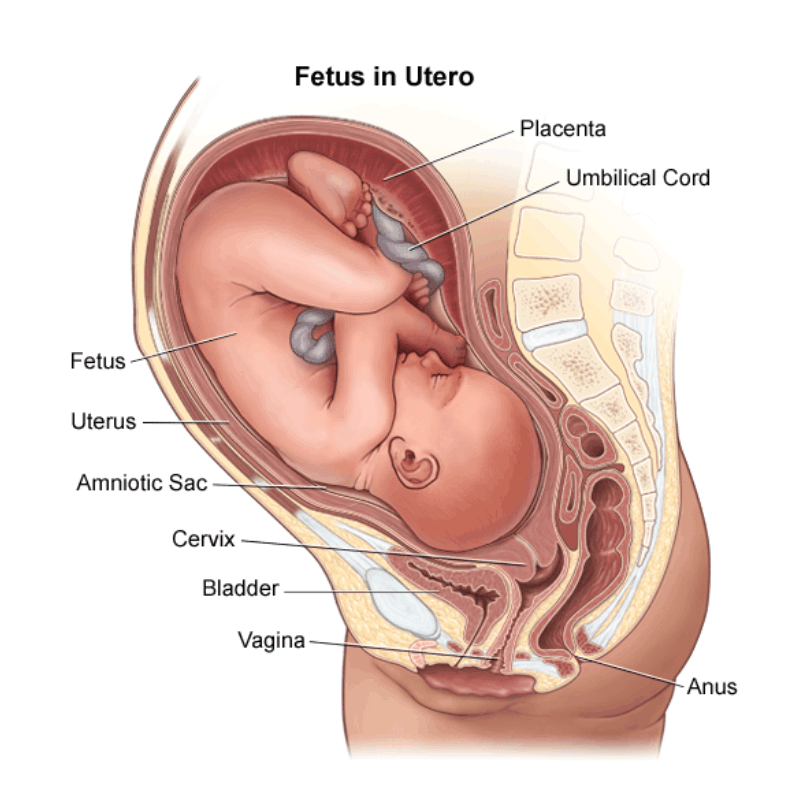
Image Source: Stanford Medicine.
#2. Can the baby feel the movement when I have sex?
Yes, it can feel the movement of the uterus as your body moves, but it feels this all the time! When you walk, dance, exercise, or jog, the baby feels this movement too, so it won’t feel any different to what it is already used to.
#3. Can sex during pregnancy cause preterm labour?
Studies haven’t been able to find any link between vaginal penetration and preterm labour. So long as you haven’t been told to avoid sex by your healthcare provider, having penetrative sex is safe.
#4. Can having sex during pregnancy cause an infection?
During pregnancy, a mucus plug develops to prevent germs and bacteria from reaching the uterus. However, you still need to follow the same rules as non-pregnant sex around STI transmission, as some STIs can increase the risk of preterm labour. And your mucus plug won’t prevent an STI.
#5. Can having sex during pregnancy cause miscarriage?
No, sex won’t cause a miscarriage. Most miscarriages are caused by abnormalities with the fetus which means it is no longer viable and unable to grow. They are not caused by having sex.
#6. Does sex during pregnancy hurt?
Sex during pregnancy shouldn’t hurt, but it might feel different. There is more blood flow to the genitals during pregnancy, which makes you more sensitive. That means there is the potential for more pleasure! But also, the potential for more pain.
This increased blood flow can also make the cervix more sensitive. This can cause discomfort for some people if it is touched by a penis or sex toy. If this is the case for you, try softer, shallower thrusts, or use a bumper to prevent the depth of penetration.
Even your orgasm can feel different during pregnancy and can feel more cramp-like than usual. This is because when you orgasm, your uterus contracts and due to increased blood flow during pregnancy as well as changes to the pelvic floor muscles, this can cause discomfort for some people.
And don’t forget about the nipples and breasts. This area tends to become much more sensitive during pregnancy, and what you might have enjoyed before may no longer be the case.
Pregnancy can make sex feel different
During pregnancy, your hormones fluctuate so some days you might find your vagina produces more lubrication, while other days, it feels a lot drier. A drier vagina makes irritation more likely, so make sure you use adequate lubrication to keep sex moving nicely.
I recommend using a silicone-based lubricant during pregnancy as they are extremely smooth, long-lasting and have fewer ingredients than water-based lubes reducing the risk of sensitivity.
The later you are in your pregnancy, the more likely you are to experience extra pressure on your bladder, so you might feel like you need to pee during sex. This is normal, and if it happens, try to switch up positions to something that creates less pressure.
Tips for good sex during pregnancy
Communicate with one another and let your partner know how your body has changed and what you want and don’t want during a sexual encounter. It might be different to what you used to enjoy, but they won’t know unless you tell them.
Slow down and explore different ways of having sex. You might need to explore more non-penetrative forms of sex, which may feel more comfortable. At 27 weeks pregnant, let me tell you, handjobs are seriously back in my house right now!
Once you have a bump, usually about 12 weeks, you don’t want to put pressure on it, so you will want to avoid positions where your partner is lying on top of you. If they are up on their arms without pressure on the bump, then it’s fine, but you don’t want their full body weight pressing on it.
After 28 weeks, you don’t want to lie on your back for prolonged periods. So, if you are having a longer session, mix up your positions. Try going on top, or side-lying positions like spooning. Remember that lying on your left side tends to be more comfortable for most people during pregnancy.
When should you be concerned about sex during pregnancy?
- It’s common to experience cramping or light spotting after sex, but if you have bad cramping that won’t go away or bleeding like a period, contact your doctor.
- If you are experiencing uterine contractions or prolonged pain during or after sex.
- If you notice any water leaking, that might be amniotic fluid.
- If you have been advised to go on pelvic rest.
- If you have placenta previa, which is a partial or complete cover of the cervix with the placenta.
If you have any of these symptoms or conditions, you need to discuss them with your doctor, LMC, or midwife, who can advise you on whether it’s safe to continue having sex or not.
Your sex life doesn’t have to stop when you are pregnant! Remember that in most cases, sex is safe during pregnancy; you just might need to make some adjustments to better suit your changing body. If you do experience pain or issues, talk to your healthcare provider straight away so they can advise you on the best way to enjoy pleasure for your body.
Reference list:
- The frequency of vaginal intercourse during pregnancy: A systematic and meta-analysis study
- Fear-related reasons for avoiding sexual intercourse in early pregnancy: A cross-sectional study
- Sexual intercourse during pregnancy and preterm delivery: Effects of vaginal microorganisms
- Association of maternal sexually transmitted infections with risk of preterm birth in the United States
Read next:
- How to have amazing sex when you don’t feel body confident according to a sex educator
- 7 tips to minimise pain during sex (alone or partnered)
- Creating intimacy without sex – 6 tips
Content disclaimer:
Adulttoymegastore does not provide medical advice, diagnosis, or treatment for illness. Any information published on this website, either by Adulttoymegastore or its authors, is not intended to be a substitute for medical advice, and you should not take any action before consulting with a medical professional.